


What Is SynthID Bio? How Google Watermarks AI-Designed Proteins

2026-10-10
Google DeepMind's SynthID Bio hides a watermark in AI-designed proteins without hurting how they work. Here's the mechanism, the Nature results, and the limits.
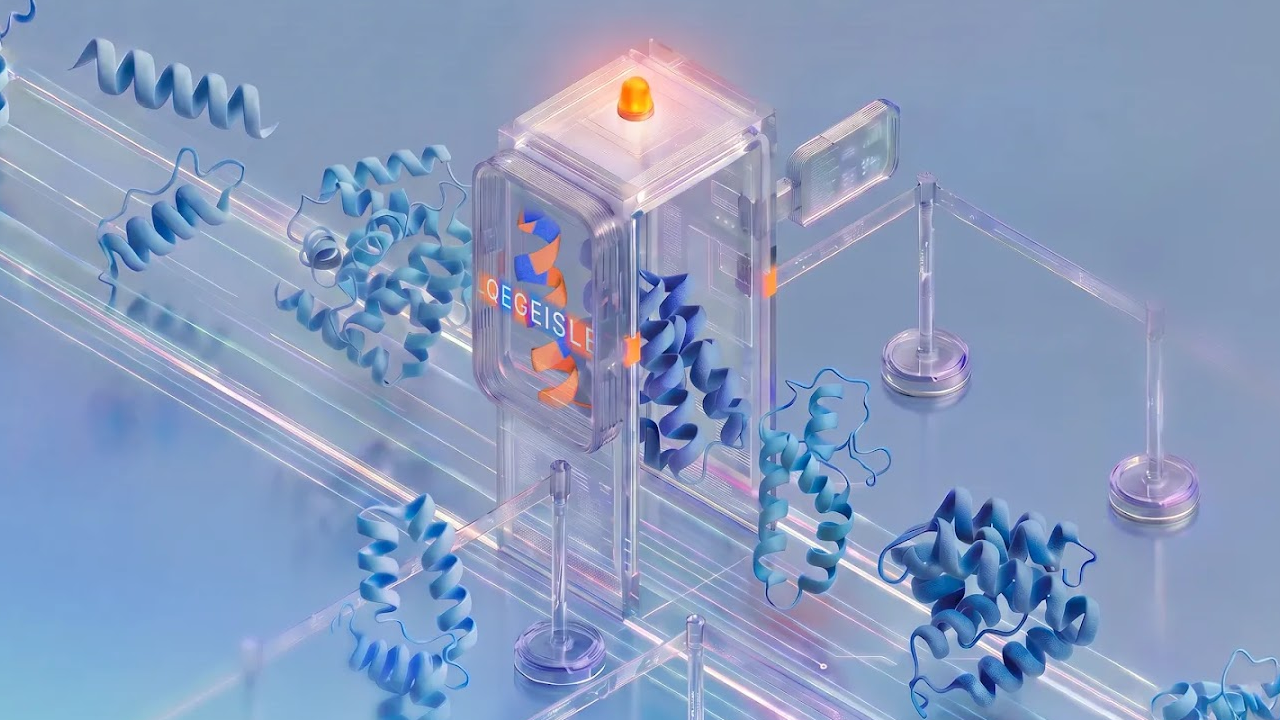
Google DeepMind published SynthID Bio on September 30, 2026, and it does something that sounds impossible at first: it hides a watermark inside a protein and that protein still works.
The work is in Nature, and it extends Google's SynthID family, which already marks AI-generated images, audio, and text. This time the target is synthetic biology. If you follow AI or biosecurity at all, this is the release that ties them together.
What SynthID Bio Actually Watermarks
SynthID Bio is a family of watermarking methods that embed a faint signature into AI-designed protein sequences and predicted 3D structures. It's, in effect, an AI protein watermark, and the first one that survives contact with a working molecule.
Here's why that's hard. A protein is a long chain of amino acids that folds into a shape, and that shape decides what the protein does. Change the sequence carelessly and you break the fold, which makes the protein useless. Change the shape carelessly and same problem. So a watermark has to hide in both the sequence and the structure without disturbing either, and the margin for error is very small.
DeepMind's approach weaves a faint statistical tell into both. It can be detected later, and the AI-generated protein behaves as if the mark isn't there.
How SynthID Bio Works in Plain Language
The mechanism borrows the idea from digital watermarks, then adapts it to biology.
Instead of altering one pixel, SynthID Bio adjusts the statistical pattern of how amino acids are chosen, and how the predicted structure is generated, in a way that's subtle but recoverable. A detector can look at a sequence or a structure and tell whether it carries the mark, using a key.
The team verified the method on protein binders, molecules built to latch onto other proteins. They used AlphaProteo, Google's binder design tool, alongside a SynthID Bio-enabled version of ProteinMPNN, a common sequence-generation method. That pairing is the core of the demo: design a binder, watermark it, and prove it still binds.
SynthID Bio Test Results
The wet-lab results are what make this more than a paper exercise.
The team tested watermarked designs against three target proteins: VEGF-A, the SARS-CoV-2 spike protein RBD, and PD-L1. Across all three, the watermarked designs matched unwatermarked versions on hit rate, binding affinity, and natural sequence diversity. In other words, the mark didn't cost performance.
DeepMind says these were the first-ever watermarked and biologically functional protein binders. That's a specific, checkable claim, and it's the reason the work landed in a top journal rather than a blog post. Wet-lab validation is the bar, and the team cleared it.
Why SynthID Bio Matters for Biosecurity
The motivation, protein design biosecurity, is straightforward once you see it.
AI can now design proteins, and some of those designs could be dangerous in the wrong hands. If legitimate labs watermark their work, then any protein without a mark is instantly suspicious. That flips the default: instead of trying to detect every bad actor, you can verify the good ones.
Ars Technica framed it the same way. Watermarking lets new proteins designed by trusted researchers be identified, which opens everything else to closer scrutiny. It's a policy-friendly design, because it doesn't restrict research. It just makes provenance checkable, and provenance is what regulators need.
SynthID Bio Limits and Open Questions
The method isn't a silver bullet, and the caveats are real.
First, detection requires the key. A watermark you can't read without Google's tooling is only useful if the detector is widely available, and that's a distribution question, not a science one. DeepMind has published the approach and points to a GitHub repo for the recommended model weights, which is a start.
Second, a determined bad actor could strip the mark, since the whole point is that it's subtle. Watermarking raises the cost of hiding rather than making hiding impossible. Third, the method covers AI-designed proteins, not lab-synthesized ones modified by hand. A protein made without AI in the loop won't carry a SynthID Bio mark, which limits coverage.
Finally, the field is early. Three target proteins is a strong proof of concept, not a universal guarantee. Broader validation is the next step, and it's worth watching whether the approach holds across more design methods.
How SynthID Bio Was Built and Tested
The engineering behind it's worth a sentence, because it explains why the method generalizes.
DeepMind didn't watermark a finished protein after the fact. It built the mark into the generation process itself, so the watermarked sequence comes out of a model that was pointed at producing one. That's why the mark is statistical rather than a literal tag, and why it can't be spotted by eye.
Testing followed the same logic. The team designed binders, watermarked them during design, then took them into the lab to check whether the mark changed anything that mattered. Three targets, three sets of results, one consistent answer. Repeating that across more proteins is the natural next experiment.
SynthID Bio and the Wider SynthID Family
It helps to see SynthID Bio as one branch of a bigger tree.
SynthID already marks Google's AI-generated images and audio, and this extension pushes the same idea into biology. The throughline is provenance: if AI can generate something, Google wants a way to tell it apart from human-made work, whether that work is an image, a voice clip, or a protein. Protein design is just the newest frontier, and arguably the one with the highest stakes.
For a regular person, the practical takeaway is that watermarking is becoming the default expectation for AI output. You'll increasingly see claims about it in model releases, and SynthID Bio is the version of that story where the stakes are biological rather than artistic.
What SynthID Bio Could Change in Practice
The near-term impact is in how labs publish and share work.
If watermarking becomes standard, a journal or a vendor could ask for a mark as part of submission, the way they ask for data availability now. A downstream lab receiving a protein design could verify its origin before building on it. That's a small procedural change with a large effect on accountability, because it makes provenance automatic rather than a question someone has to remember to ask.
The longer-term impact is on the regulatory conversation. Governments have struggled to write rules for AI-designed biology, partly because the technology moves faster than the paperwork. A technical marker that travels with the output gives regulators something concrete to reference. It doesn't settle the policy, but it removes one excuse for inaction.
For the AI side of the house, SynthID Bio also signals where Google thinks watermarking is going. Digital media was the proving ground. Biology is the stress test.
Is SynthID Bio Worth Paying Attention To?
If you care about where AI and biology meet, yes. SynthID Bio is a careful piece of science that solves a real problem without breaking the thing it's marking, and publishing it in Nature means it's meant to be built on.
It won't change your phone today, and there's no app to grab or install. The work lives in a paper and a GitHub repository, not a store listing. But it's the kind of release that shapes how AI is regulated, so it's worth understanding before it shows up in a policy headline. If you want a hands-on sense of what AI can do for science, the current Gemini app is the accessible entry point, and it's worth checking its privacy and permissions before you feed it research material.

Google Gemini is a productivity and creativity app that supports live conversations and multimodal creation.
 NEWS
NEWS REVIEWS
 HOWTO
HOWTO