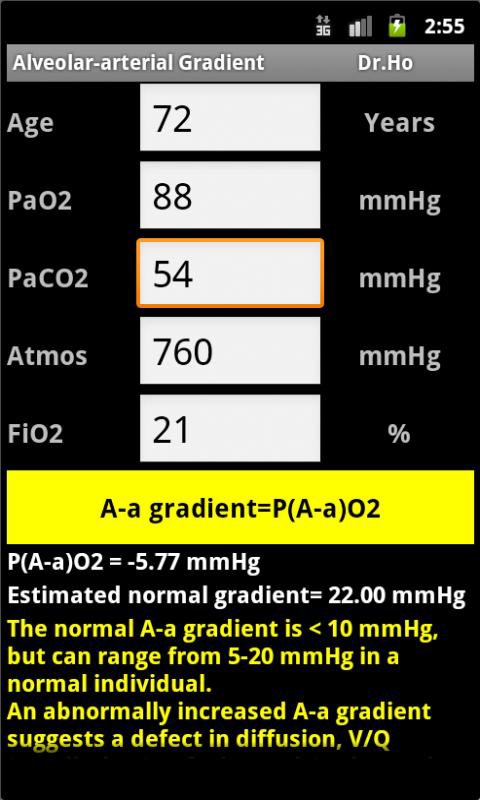
The Alveolar-arterial gradient (A-a gradient), is used to compare the causes of hypoxemia.
A-a Gradient EquationA - a gradient = PAO2 - PaO2 Where:
PAO2 = alveolar PO2 (calculated from the alveolar gas equation)
PaO2 = arterial PO2 (measured in arterial blood)
The Alveolar Gas EquationPAO2 = PIO2 - PACO2/R
Where: PIO2 = FIO2 x (760 mmHg - 47mmHg) = inspired O2
- FIO2 = 21% at sea level atmospheric pressure = 0.21
- 760 mmHg = atmospheric pressure at sea level
- 47 mmHg = H2O pressure
PACO2 = arterial PCO2 measured in plasma
R = respiratory exchange ratio or respiratory quotient = 0.8 under normal conditions
Values and MeaningThe normal A-a gradient is < 10 mmHg, but can range from 5-20 mmHg in a normal individual. An increased A-a gradient suggests a diffusion defect, V/Q (ventilation/perfusion) defect, or right-to-left shunt.
Latest Version
1.2Uploaded by
Toon Bodyslam
Requires Android
Android 2.3.4+
Category
Free Medical AppContent Rating
UnratedWarning – content has not yet been rated. Unrated apps may potentially contain content appropriate for mature audiences only.Learn More · Unrated
Report
Flag as inappropriateLast updated on Jan 17, 2016
This release includes minor bug fixes and general improvements. Update to the latest version for the best experience.




APKPure - A multi-platform app store primarily focused on Android, providing extensive app-related content. Discover the app you want easier, faster, and safer, with quick and efficient downloads and installations.