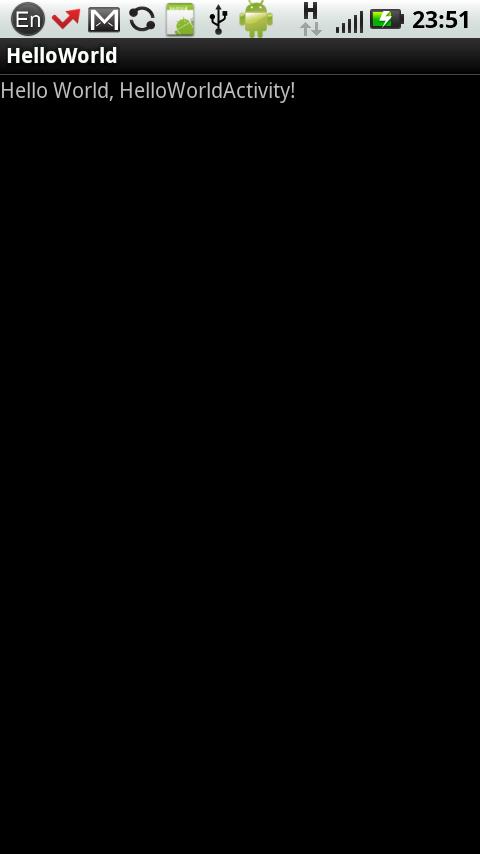
A "Hello, world!" program is a computer program that outputs "Hello, World!" (or some variant thereof) on a display device. Because it is typically one of the simplest programs possible in most programming languages, it is by tradition often used to illustrate to beginners the most basic syntax of a programming language. It is also used to verify that a language or system is operating correctly.
A "Hello, world!" program has become the traditional first program that many people learn. In general, it is simple enough so that people who have no experience with computer programming can easily understand it, especially with the guidance of a teacher or a written guide. Using this simple program as a basis, computer science principles or elements of a specific programming language can be explained to novice programmers. Experienced programmers learning new languages can also gain a lot of information about a given language's syntax and structure from a "Hello, world!" program.
In addition, "Hello, world!" can be a useful sanity test to make sure that a language's compiler, development environment, and run-time environment are correctly installed. Configuring a complete programming toolchain from scratch to the point where even trivial programs can be compiled and run can involve substantial amounts of work. For this reason, a simple program is used first when testing a new tool chain.
最終のバージョン
1.0投稿者
Vincenzo Scognamiglio
Android 要件
Android 1.5+
カテゴリー
フリー 仕事効率化 アプリコンテンツのレーティング
Unrated · Warning – content has not yet been rated. Unrated apps may potentially contain content appropriate for mature audiences only.
Last updated on 2015年09月02日
このバージョンには軽微な不具合の修正と全般的な改善が含まれています。快適に利用するため、最新版にアップデートしてください。


APKPure - Androidを中心としたマルチプラットフォームのアプリストアで、豊富なアプリ関連コンテンツを提供しています。より簡単に、より速く、より安全にアプリを見つけることができ、ダウンロードとインストールも迅速かつ効率的です。





![モバイル C [ C/C++ コンパイラ ] APK](https://image.winudf.com/v2/image/Y29tLmR6dGFsbC5jY3IuYW5kcm9pZC5hZG1vYl9pY29uXzE1MzU0Mjk1MjBfMDUx/icon.png?w=102&fakeurl=1)